News & Information

RBP|Unlocking New Limits in Super‑Hard Manufacturing
Many manufacturers face recurring issues such as frequent edge chipping in micro-drills (diameter below 0.3 mm), significant tool-life variation within the same production batch, and fluctuating production yields.
These problems can lead to delayed deliveries, sharply increased unit manufacturing costs, and even large-scale scrap losses for downstream customers.
Manufacturers often attribute these failures to raw material batches, grinding wheel selection, or operator experience. However, extensive production data indicates that the underlying cause lies in the physical limitations of conventional machining methods when processing ultra-hard and brittle materials.
Market Drivers: Growing Demand for Ultra-Hard Cutting Tools
1. Increasing Product Miniaturization Is Driving Market Demand
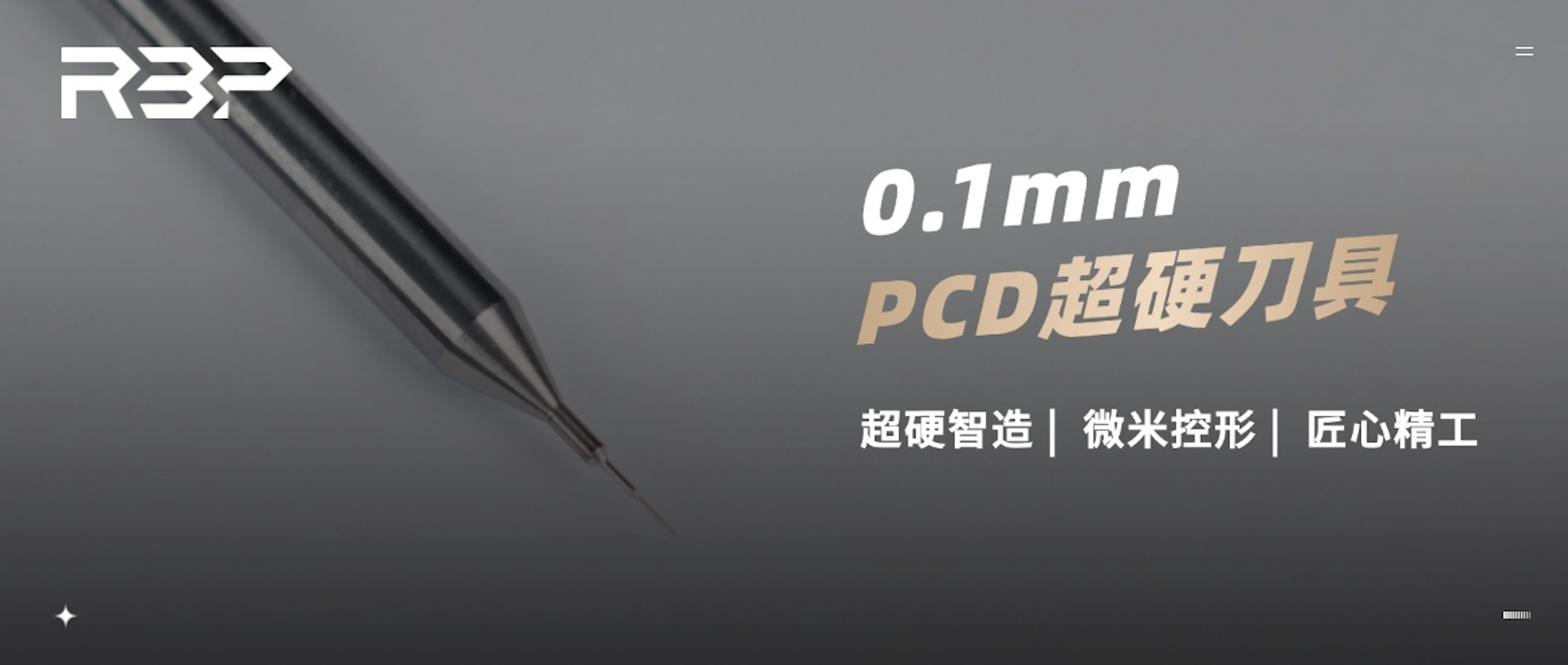
As downstream products become increasingly miniaturized, demand for micro-drills below 0.3 mm—and even down to 0.1 mm—as well as tools with complex chip-breaker grooves and freeform cutting edges, continues to grow.
Manufacturers are no longer focused solely on simple, straight cutting edges. Greater emphasis is being placed on tool geometry complexity and cutting-edge integrity.
According to industry research, micro-drills in the 0.1–0.3 mm range accounted for 55.4% of the global PCB micro-drill market in 2025–2026, while shipments of ultra-micro drills below 0.1 mm grew significantly faster than the industry average.
Driven by AI server high-layer PCBs and advanced IC substrates, mainstream drilling diameters are shrinking from the traditional 0.3 mm range to 0.1–0.15 mm. The unit price of ultra-micro drill bits can reach 25 times that of conventional sizes, reflecting the growing demand for extremely small-diameter tooling.
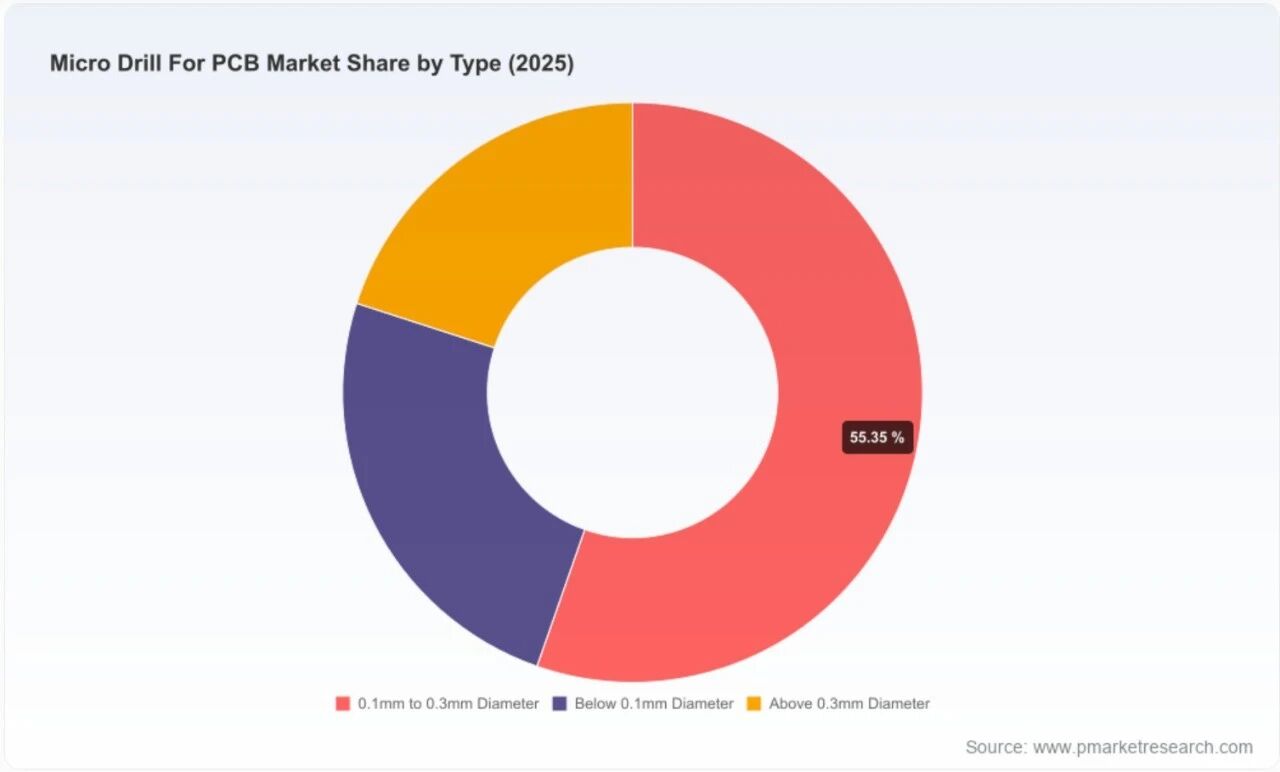
Global PCB Micro-Drill Market Share by Type, 2025
2. Manufacturing Stability Is Becoming Increasingly Important
High-end PCB and IC substrate production lines have increasingly adopted lights-out and unattended manufacturingmodels. Manufacturers are pursuing continuous, 24-hour production, making consumable reliability a critical requirement.
Edge chipping and significant variations in tool life can directly trigger machine downtime, material scrap, and production scheduling disruptions. The resulting downtime and quality losses are increasingly unacceptable in modern automated manufacturing environments.
As a result, tool evaluation criteria are changing.
It is no longer enough for a tool to simply cut. Manufacturers now require high batch-to-batch consistency, predictable tool life, and controllable failure rates—eliminating uncertainty from the production process.
How Difficult Is It to Manufacture Diamond Micro-Drills?
Manufacturing 0.1 mm-class diamond micro-drills is an exceptionally demanding process. It involves far more than simply removing material.
Challenge 1: An Inherent Material Contradiction — Extreme Hardness Combined with High Brittleness
Diamond has a Mohs hardness of 10, making it the hardest naturally occurring material. However, it is also highly brittle.
Conventional mechanical grinding causes significant grinding wheel wear and mechanical stress. Extremely small drill bits are particularly susceptible to edge chipping and breakage, resulting in high scrap rates. Manufacturing solid diamond micro-drills with diameters of 0.1 mm using conventional grinding is therefore extremely challenging.
CVD and MCD single-crystal diamond are electrically non-conductive, making conventional electrical discharge machining (EDM) unsuitable.
Meanwhile, conventional nanosecond and picosecond laser processing can generate thermal effects that lead to diamond graphitization and microcracks along cutting edges. A drill may appear geometrically correct but fail through chipping as soon as it enters actual machining.
Challenge 2: Extremely Small Dimensions and Complex 3D Geometry Demand Exceptional Machine Performance
At a drill diameter of just 0.1 mm, the drill point, helical flutes, clearance angles, and cutting edges must all meet stringent precision requirements.
Even minor machine vibration or deviations in machine-bed rigidity can compromise the cutting edge and render the tool unusable.
Conventional integrated laser systems may lack the mechanical and motion-control capabilities required to achieve this level of precision.
Challenge 3: Low-Thermal-Damage Processing Requires Dedicated Process Parameters
Femtosecond laser processing is required to suppress thermal damage effectively. However, purchasing a femtosecond laser source alone is not sufficient.
Different diamond materials, including MCD and PCD, require specifically optimized processing parameters. Dedicated process technologies and databases must be developed for each material and application.
The coordination between machine hardware, software, and process parameters is equally critical. Even on the same machine, different process settings can produce dramatically different cutting-edge quality.
Challenge 4: The Real Challenge Is Not Producing Samples, but Achieving Consistent Batch Production
Producing ten qualified samples in a laboratory is one thing. Maintaining consistent cutting-edge quality, stable yields, and repeatable performance across dozens or hundreds of tools is an entirely different challenge.
Achieving production-ready results requires seamless integration of machine hardware, software, and process databases.
In short, producing a prototype is not the difficult part. The real challenge is consistently manufacturing qualified 0.1 mm solid diamond micro-drills at production scale.
Achieving the required geometry does not necessarily mean the tool is capable of performing reliably in actual machining.
Technological Evolution: Breaking Through the Limitations of Ultra-Hard Material Processing
As the industry seeks to balance machining geometry, mechanical and thermal damage, and production consistency, three generations of mainstream processing technologies have emerged.
Their different material-removal mechanisms produce significantly different machining results.
First Generation: Mechanical Material Removal — Conventional Grinding
Conventional grinding removes material through the compression, scratching, and shearing actions of abrasive particles.
Advantages:
Mature equipment and established process systems, relatively low processing costs, and suitability for mass production of ultra-hard tools with relatively simple geometries.
Limitations:
As a contact-based machining process, grinding introduces substantial mechanical stress, which can generate microscopic cracks beneath the PCD surface that are invisible to the naked eye.
Frictional heat can also cause binder-phase loss and weakening, as well as diamond graphitization.
In addition, the physical geometry of the grinding wheel limits its ability to produce complex, irregular grooves and extremely small, intricate structures.
Machining quality also depends heavily on operator experience, making batch-to-batch consistency difficult to maintain.
Even subsequent polishing can only improve surface roughness; it cannot repair subsurface damage that has already occurred.
Second Generation: Thermal Melting and Vaporization — Nanosecond Laser Processing
Nanosecond laser processing eliminates the physical contact constraints of grinding by using laser energy to melt and vaporize material.
Advantages:
Non-contact machining eliminates mechanical contact stress and enables the production of certain complex groove structures that are difficult to achieve through conventional grinding.
Limitations:
This remains a thermal processing method.
The relatively long pulse duration of nanosecond lasers allows heat to spread into the surrounding material, creating a noticeable heat-affected zone.
Defects such as resolidified layers, pores, and diamond graphitization may occur around the cutting edge.
Additional polishing and grinding operations are often required, introducing further handling and positioning steps. Repeated clamping can also introduce positioning errors.
Meanwhile, thermally induced internal defects may remain even after post-processing.
These limitations make nanosecond laser processing less suitable for the highly reliable mass production of 0.1 mm-class PCD micro-drills.
It is therefore often considered an intermediate processing solution rather than a complete answer to ultra-micro-tool manufacturing challenges.
Third Generation: Cold Ablation — Femtosecond Ultrafast Laser Processing
Femtosecond lasers operate at extremely short pulse durations. Material is removed through ultrafast laser ablation before significant heat can diffuse into the surrounding substrate.
This greatly suppresses thermal accumulation and minimizes heat-related damage.
Advantages:
As a low-thermal-damage, non-contact process, femtosecond laser machining significantly reduces the risk of heat-affected zones, resolidified layers, and mechanically induced subsurface microcracks.
Combined with digital software systems, machining parameters and processes can be standardized and reproduced, supporting complex geometries, low-damage processing, and improved batch consistency.
Limitations:
Having a femtosecond laser source alone does not guarantee successful ultra-hard tool manufacturing.
A complete solution requires dedicated tool-processing software systems and carefully matched hardware and process technologies to achieve stable production results.
Technology Comparison
| Key Characteristics | Conventional Grinding | Nanosecond Laser | Femtosecond Laser (LFS-U) |
|---|---|---|---|
| Machining Force | Mechanical contact with high mechanical stress | Non-contact, no mechanical contact stress | Non-contact, virtually no mechanical contact stress |
| Complex 3D Forming | Restricted by grinding wheel geometry; complex structures are difficult to produce | Customized motion systems enable complex freeform machining | Customized motion systems enable complex freeform machining |
| Thermal Effects | Significant frictional heat; binder-phase damage and diamond graphitization | Noticeable heat-affected zone and potential resolidified layers | Extremely low thermal impact; minimizes graphitization and phase changes |
| Subsurface Integrity | Susceptible to microcracks and grain-boundary damage; subsurface defects may be invisible | Potential thermally induced micro-defects and resolidified residues | Minimizes microcracks and helps preserve substrate integrity |
| Surface Quality | Limited by abrasive grain size; subsurface damage may remain | Resolidified layers and relatively poor surface finish may occur | Surface roughness of Ra ≤ 0.1 μm; mirror-like finish |
An Important Distinction:
Having a femtosecond laser source does not automatically translate into successful ultra-hard material machining.
The laser source is only the foundation. Successful process implementation requires a complete integration of machine hardware, optical systems, dedicated software, and process technologies.
Simply purchasing a femtosecond laser can still result in edge burning, contour distortion, and other processing defects.
A Complete Solution for Ultra-Precision Machining of Ultra-Hard Materials
Driven by rapid growth in downstream industries such as AI server PCBs and advanced semiconductor packaging, the industry's competitive focus has shifted beyond simply producing prototypes.
The real challenge is the ability to consistently manufacture ultra-hard cutting tools with intact cutting edges, uniform performance, and repeatable quality.
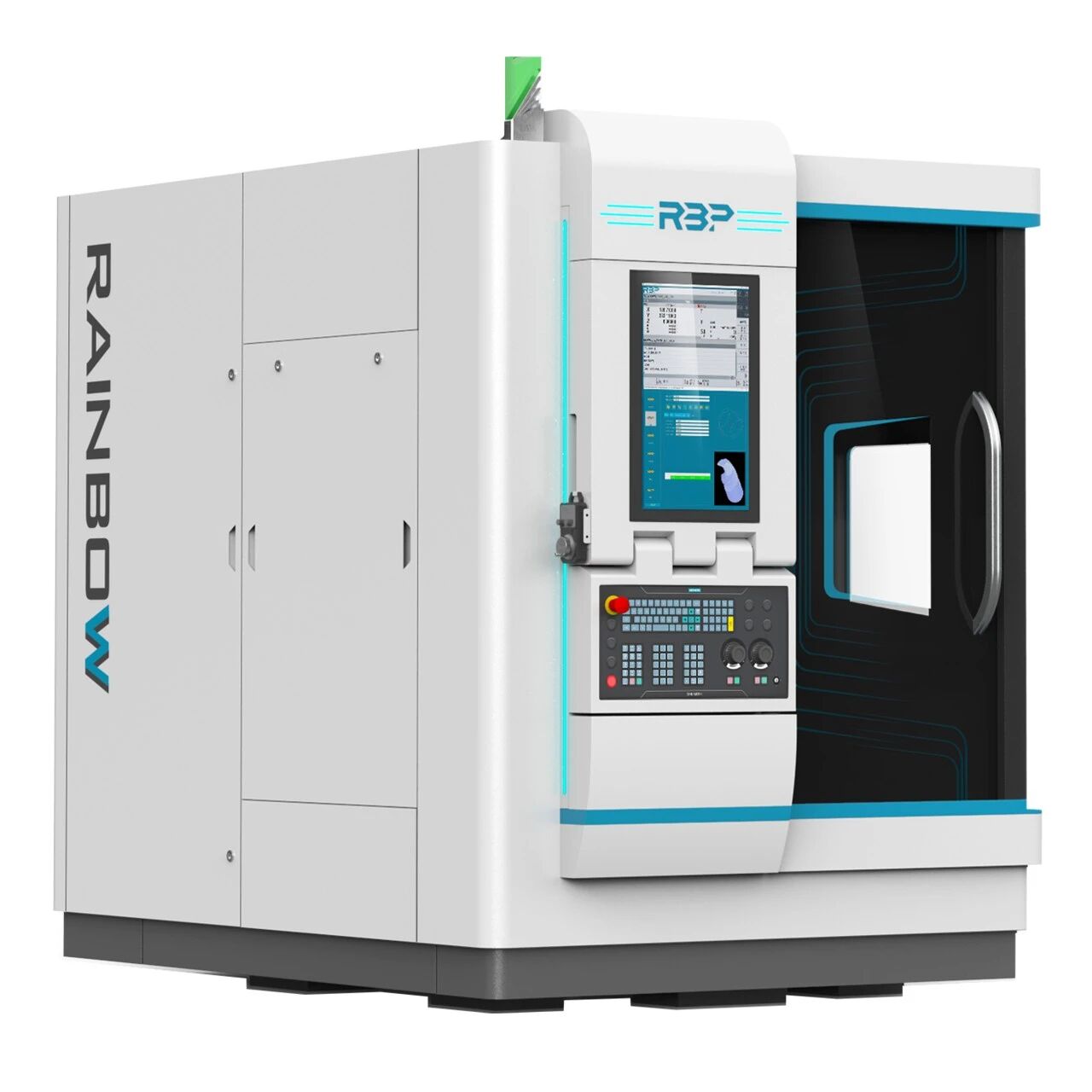
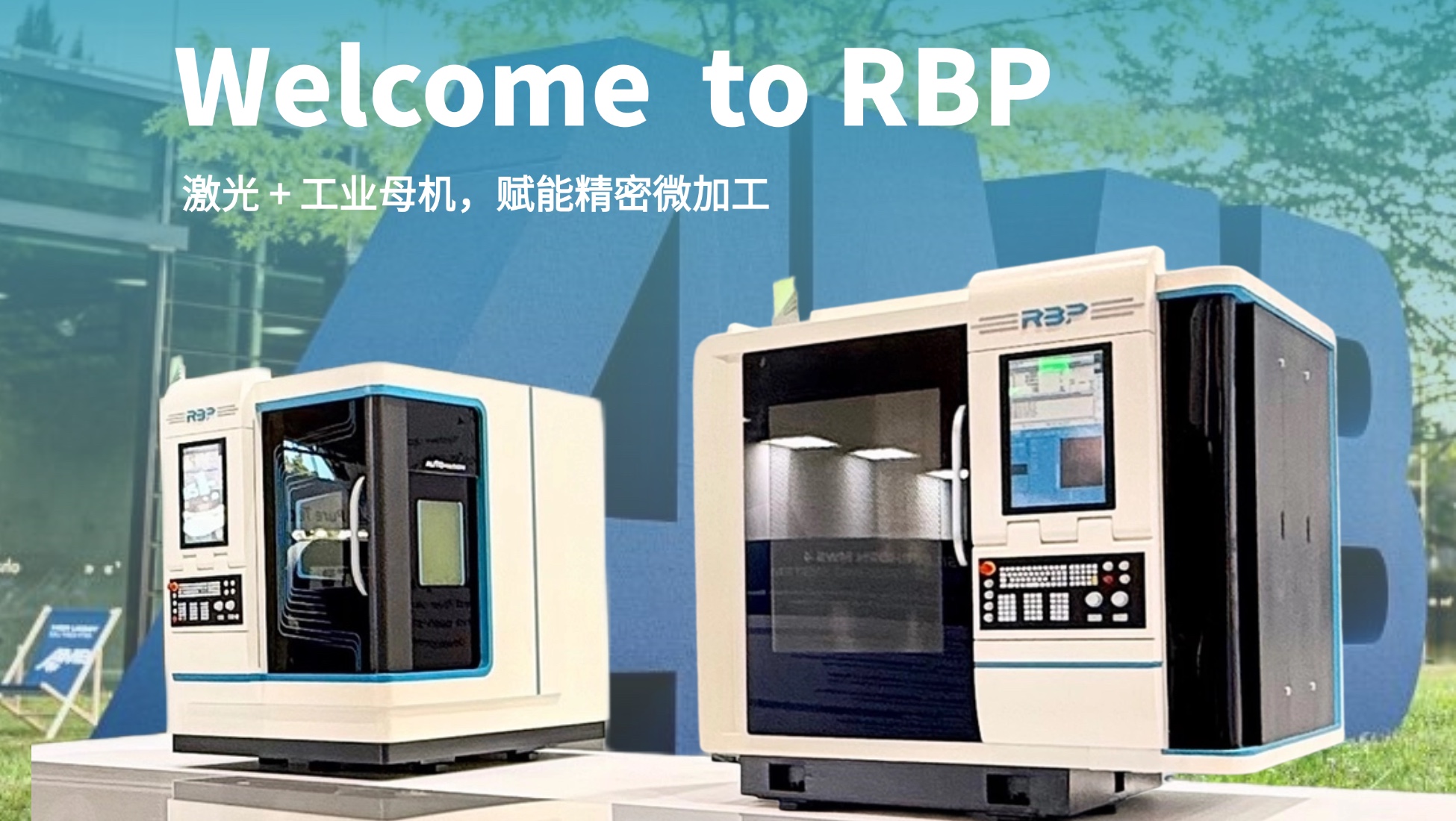
RBP LFS-U Series Ultrafast Laser 3D Machining System
Developed specifically to address these industry challenges, the RBP LFS-U Series Ultrafast Laser 3D Machining System provides an integrated engineering solution for ultra-hard material processing.
Through a digitalized machining workflow, process capabilities that traditionally relied heavily on individual engineers' experience can be transformed into standardized and reusable digital process assets.
This approach addresses key manufacturing challenges associated with 0.1 mm-class PCD, CVD, and MCD micro-drills, including hidden machining damage, shortened tool life, and inconsistent batch quality.
It also supports domestic ultra-hard tool manufacturers in overcoming critical manufacturing bottlenecks and advancing localization within high-end manufacturing supply chains.
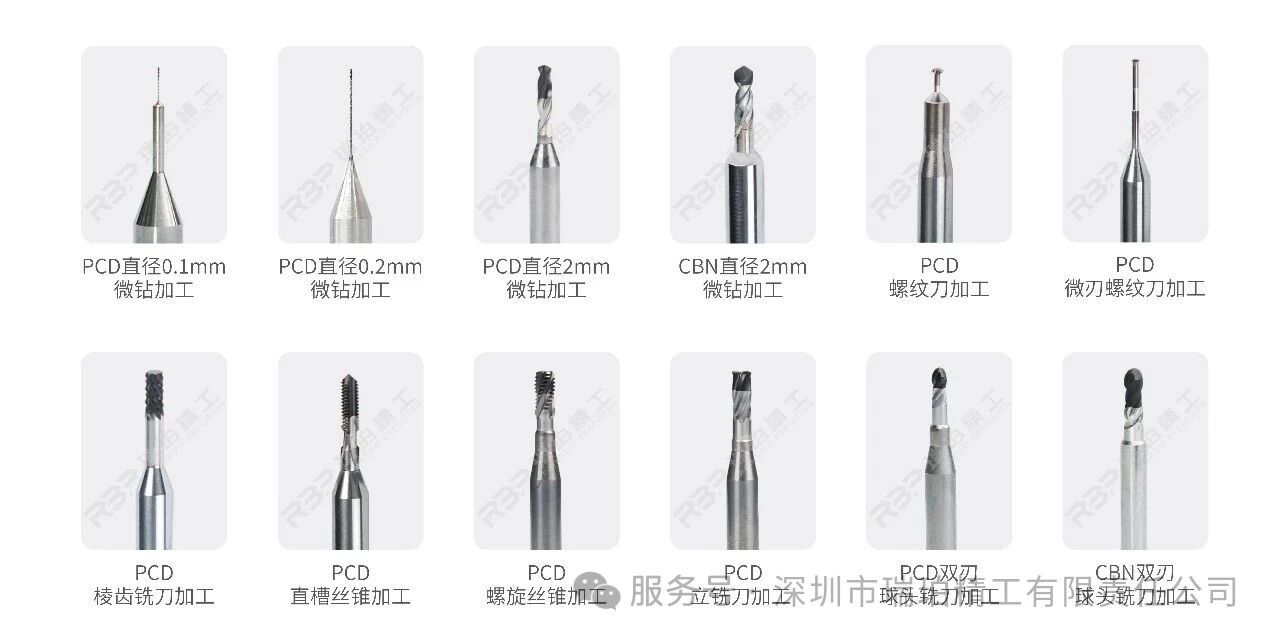
Selected Machining Samples
The path toward mass production of ultra-hard micro-tools is not simply a matter of upgrading the laser source. It requires systematic innovation across machine hardware, optical systems, software, and process engineering.
With femtosecond cold-ablation technology at its core, the RBP LFS-U Series Ultrafast Laser 3D Machining System integrates these capabilities into a complete manufacturing solution, bridging the gap between prototype development and stable production.
RBP is committed to addressing the manufacturing challenges of 0.1 mm-class diamond micro-drills and working alongside tooling industry partners to advance precision manufacturing for high-end PCB and semiconductor packaging applications.
Together, we aim to accelerate technological innovation and strengthen domestic manufacturing capabilities across the high-end precision tooling industry.
Hot News