News & Information

Femtosecond-level reshaping of the micro world: Ruipoe Precision Industry's LFS-U Series, the "Digital Factory Hub" for ultra-hard tools, officially goes live!
In the field of ultra-hard micro-tool manufacturing, materials such as PCD, CVD, and MCD have become indispensable to high-end manufacturing thanks to their exceptional wear resistance and cutting performance. However, these materials are also extremely difficult to machine. Conventional grinding often suffers from low efficiency and significant thermal effects, while micro-diameter tools are particularly susceptible to microcracks and geometric deviations.
How can ultra-hard micro-tools be machined consistently and repeatedly with micron-level precision? This has become a key challenge across the industry.
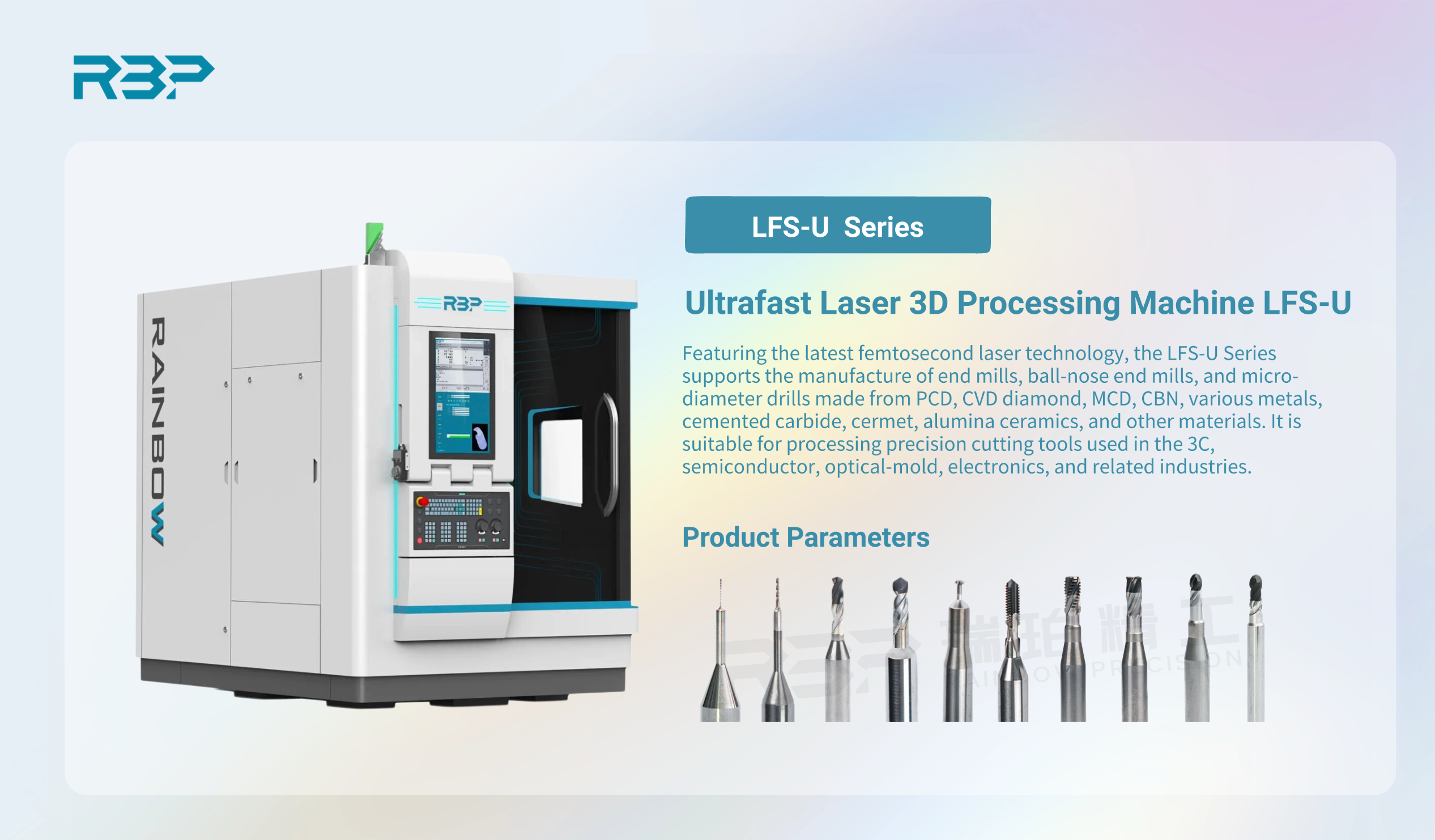
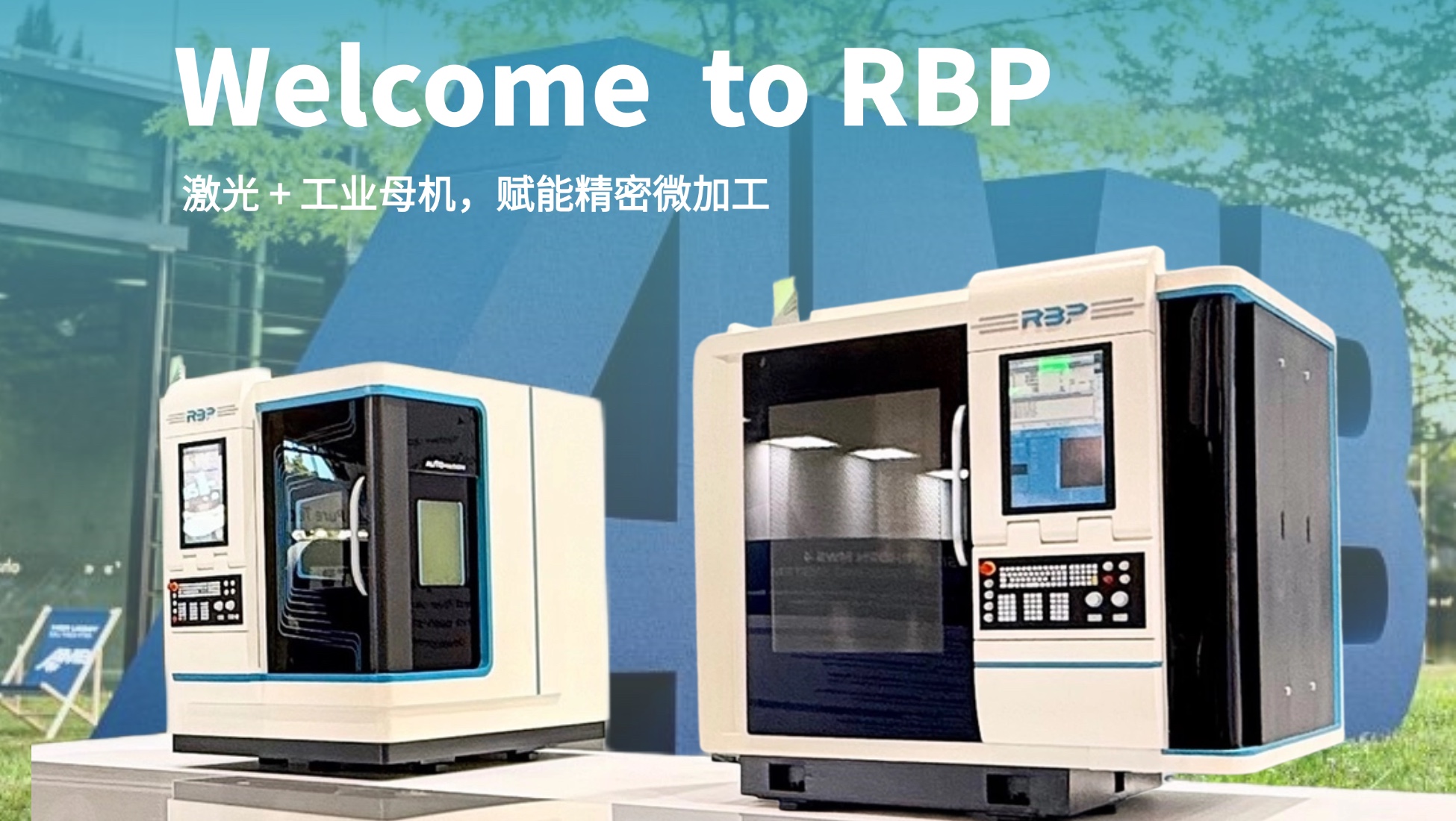
The LFS-U Series Ultrafast Laser 3D Machining Machine, developed by Shenzhen Rainbow Precision Co., Ltd. (RBP), is designed specifically to address these challenges.
By deeply integrating femtosecond laser technology, five-axis coordinated motion, precision optical path design, and independently developed CAM software, RBP has established a digital manufacturing platform dedicated to ultra-hard micro-tool production, delivering systematic advancements across equipment, machining processes, and software.
01. High-Precision 3D Laser Machining for Ultra-Hard Materials
The core capabilities of the LFS-U Series can be summarized as:
Micron-level precision + Minimal thermal impact + One-setup complex 3D machining
Motion Control
Built on a high-rigidity vertical machine-bed structure and equipped with high-precision linear motors and rotary axes, the LFS-U Series maintains stable dimensional consistency in tool profiles and cutting edges, even under high-dynamic operating conditions.
This provides a reliable foundation for subsequent high-volume production.
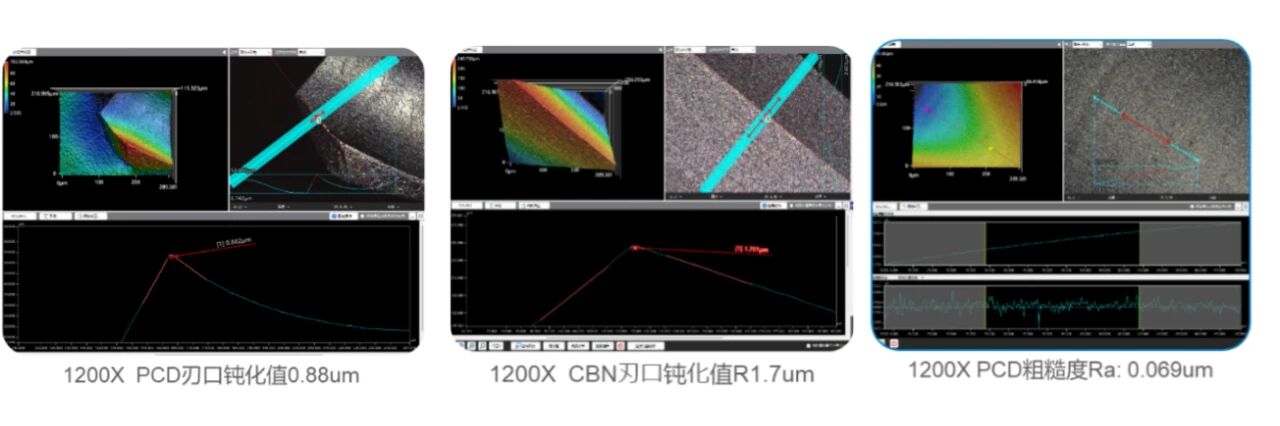
In terms of machining mechanisms, femtosecond lasers use ultrashort pulses to remove material through a cold-ablation process. Surface roughness can reach Ra ≤ 0.1 μm, with virtually no heat-affected zone of the kind commonly associated with conventional long-pulse laser processing and grinding.
This effectively prevents damage to the material's microstructure and degradation of its properties.
This characteristic is particularly important when processing brittle ultra-hard materials such as PCD, CVD, and MCD, helping improve cutting-edge integrity and tool service life.
In addition, the LFS-U Series supports both roughing and finishing of micro-tools within the same coordinate system.
From efficient blank shaping to the precision machining of complex geometric features such as helical flutes, chip-breaker grooves, and freeform cutting edges, the entire process can be completed in a single setup.
This integrated 3D roughing and finishing approach reduces errors caused by intermediate transfers and repeated clamping, while significantly improving overall machining efficiency.
Material Compatibility
The system supports precision machining of a wide range of high-hardness, wear-resistant materials, including:
Tool Types
The LFS-U Series accommodates both standard micro-tools and customized special-purpose tools.
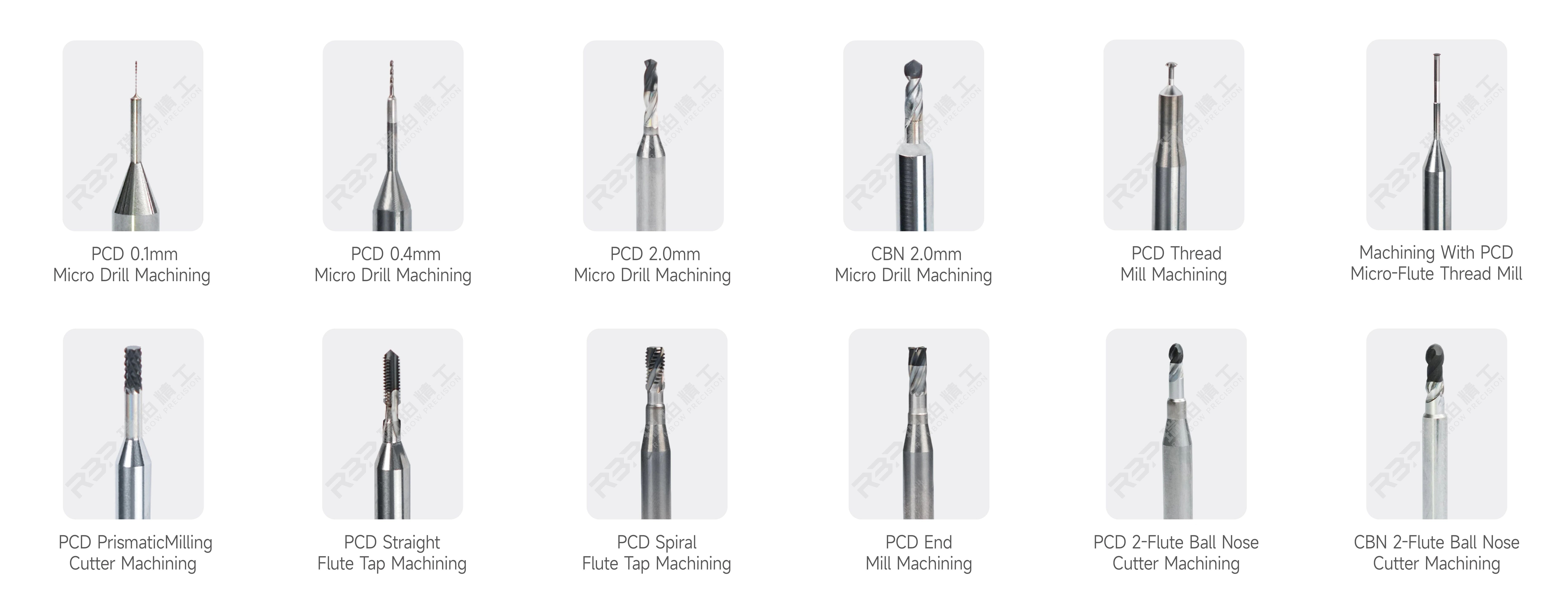
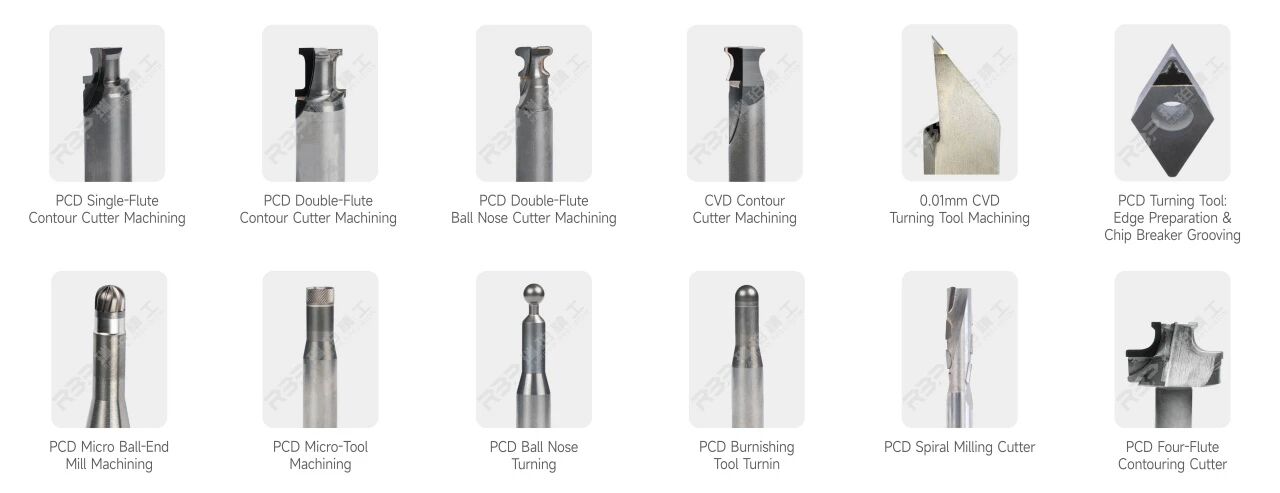
These include micro-diameter drills, end mills, and ball-nose end mills, as well as customized tools featuring special flute geometries, complex cutting edges, and localized functional surfaces.
Tools machined by the LFS-U Series feature sharp cutting edges, smooth and even surfaces, and exceptionally low surface roughness. They can meet the required application standards without additional finishing processes.
02. Independently Developed CAM Software
An Integrated Workflow from 3D Models to NC Programs
Unlike conventional equipment configurations that combine a machine with generic CAM software, the LFS-U Series is deeply integrated with RBP's independently developed software platform.
Specifically designed around the geometric characteristics and machining requirements of ultra-hard micro-tools, this software serves as the central intelligence of the entire manufacturing solution.
Direct Import of Multiple 3D Model Formats
The software supports direct import of commonly used MESH and 3D CAD formats, eliminating complicated file conversion and geometry reconstruction procedures.
Flexible Integration of Parametric Templates and Custom Machining Processes
For standard tool types, such as micro-diameter drills, end mills, and ball-nose end mills, the software provides established parametric design templates.
Users simply enter the key tool parameters, and the system automatically generates the corresponding 3D model and machining process, significantly shortening the new product introduction cycle.
For complex non-standard tools, engineers can freely edit machining steps, parameters, and toolpaths to develop dedicated process templates tailored to their manufacturing requirements.
As projects accumulate, these templates gradually become valuable enterprise-level process assets.
Geometry-Driven Process Planning
Ultra-hard micro-tools often feature complex structures, including multi-stage helical flutes, localized freeform cutting edges, and asymmetric chip-breaker grooves.
The LFS-U software platform enables engineers to design machining processes in a more intuitive, geometry-driven manner, rather than relying solely on 2D cross-sections and abstract parameters.
Integrated Measurement and Machining Feedback
Different process stages and machining steps can be assigned their own laser and motion parameters.
This enables integrated management of geometry, machining processes, and laser conditions, providing greater flexibility for process optimization.
03. Machined Products and Typical Applications
Supported by the integrated equipment and CAM software, the LFS-U Series offers extensive machining capabilities across various ultra-hard materials and micro-diameter tooling applications.
Key Application Areas
3C Electronics and Semiconductor Packaging: Laser manufacturing of precision diamond tools.
Optical Mold Manufacturing: Laser fabrication of diamond tools for precision optical mold machining.
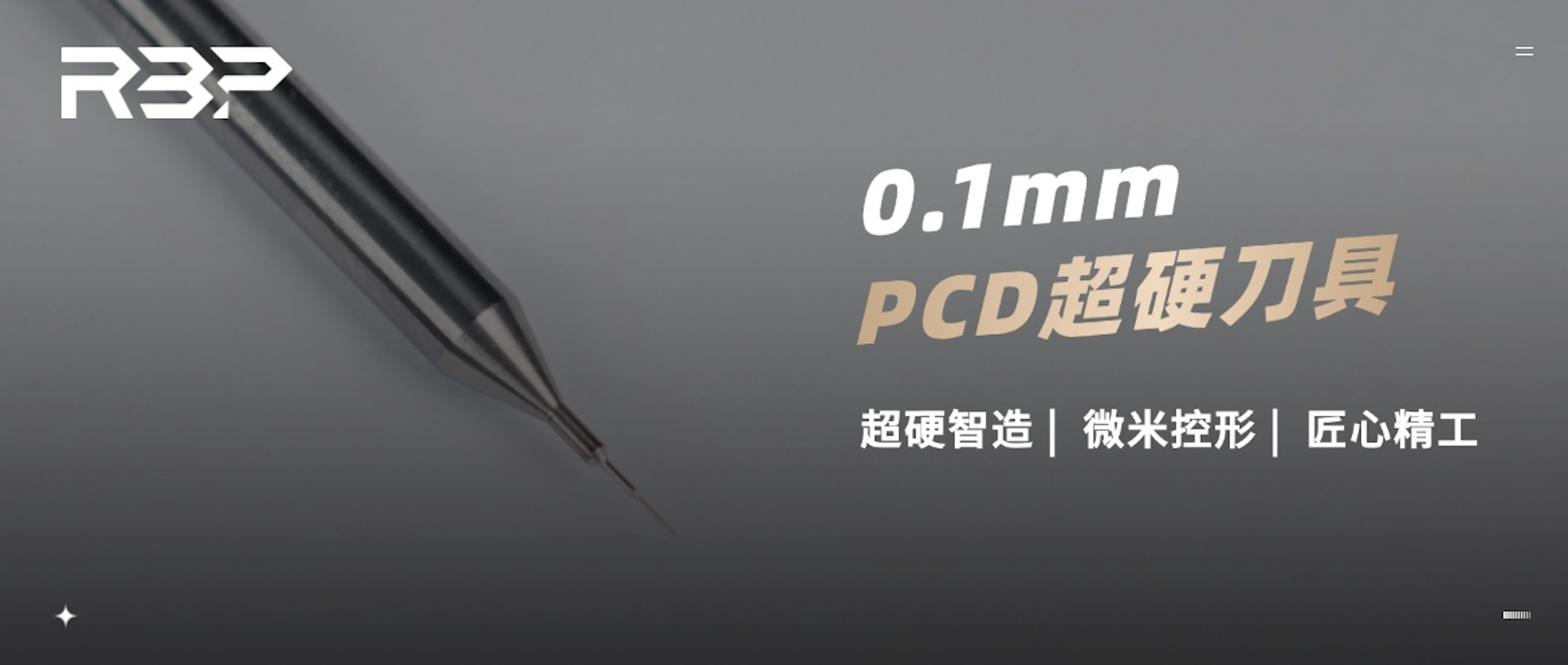
Precision Electronic Circuits and PCB Manufacturing: Laser machining of 0.1 mm diameter PCD micro-drills.
Micro- and Nanostructured Components: Direct machining of components with stringent requirements for dimensional accuracy, geometric profiles, and surface microstructures, supported by broad material compatibility.
04. Comprehensive Advantages
From Machinability to Efficient and Repeatable Manufacturing
Compared with conventional machining methods, the advantages of the LFS-U Series go beyond simply determining whether a material can be machined.
The real value lies in achieving efficient, stable, and repeatable manufacturing.
Machining Performance
The minimal thermal impact of femtosecond laser processing, the geometric flexibility of five-axis coordinated motion, and micron-level positioning accuracy work together to ensure sharp cutting edges, precise tool profiles, and excellent surface quality.
These characteristics establish a solid foundation for improved tool life and cutting performance.
Software Capabilities
The integrated software platform creates a complete digital workflow, allowing proven machining processes to be standardized, stored, reused, and shared.
Enterprise-Level Benefits
The combined capabilities of equipment + software + process templates help enterprises gradually reduce their dependence on a small number of highly experienced process specialists.
This also supports consistent product quality and production efficiency during capacity expansion and new product introduction.
As downstream industries continue to demand increasingly sophisticated micro-features and higher surface quality, the performance of ultra-hard micro-tools is becoming an increasingly important factor in the competitiveness of the entire manufacturing process chain.
The LFS-U Series Ultrafast Laser 3D Machining Machine has evolved beyond the role of a conventional machine tool. It represents an integrated digital process platform for ultra-hard micro-tool manufacturing, bringing together equipment, software, and machining expertise to advance precision tool manufacturing.
Hot News